By: Bluewolfcerts | Published on: December 23, 2025 | Updated on: December 23, 2025
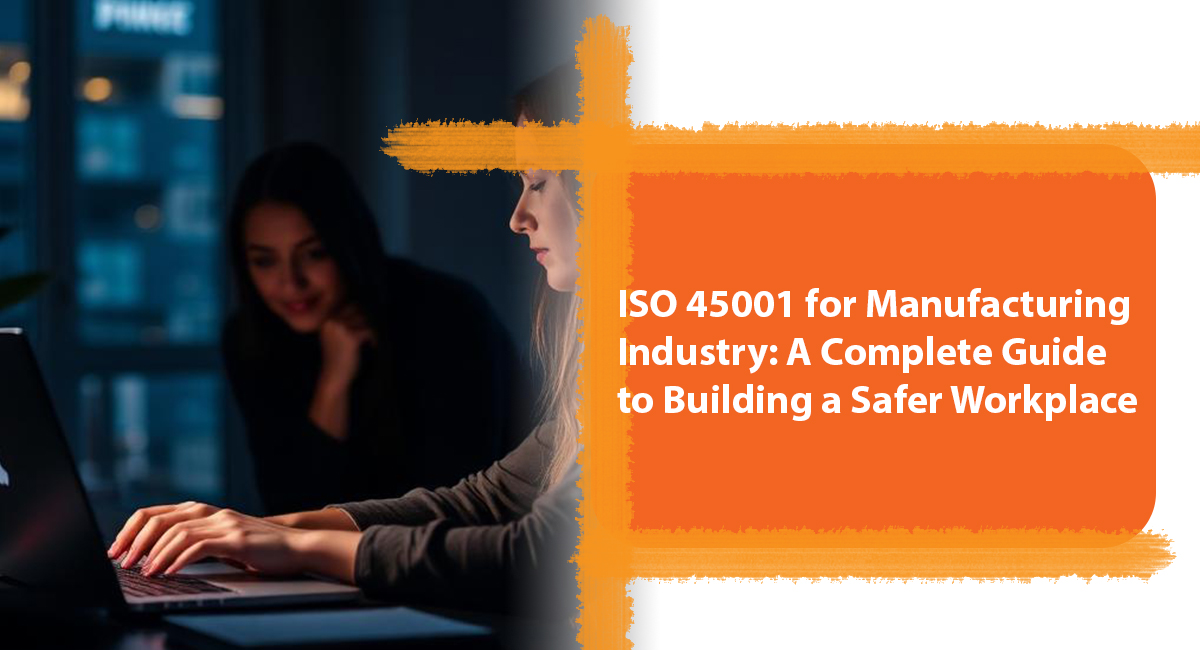
The manufacturing industry heavily depends on the safety at workplace. Manufacturers deal with diverse occupational risks, including heavy machinery and high-temperature processes, chemical work, as well as repetitive tasks. The ISO 45001 standard, the international Occupational Health and Safety Management System (OHSMS), is a structured and effective framework that can assist organizations to develop safer and healthier workplaces.
This manual is a guide on how ISO 45001 for manufacturing industry assists in minimizing injuries, enhancing compliance, and developing a robust safety culture.
The working conditions of manufacturing are unstable and dangerous. ISO 45001 helps organizations:
Implementing ISO 45001, the manufacturers create mechanisms that reduce the probability of risks and enhance the safety performance on all levels.
The system offered by ISO 45001 is a structured one that is in tandem with the safety requirements in the workplace. The most applicable elements in manufacturing would be some of the following:
Some of the sources of risks that manufacturers need to document and appraise include:
Setting up standard operating procedures (SOPs) is a way of maintaining uniform safety practices.
The manufacturing plants should be ready to deal with fire, chemical spills, gas leakages, or machinery failures.
Safety behavior and risk identification are difficult to achieve without employee participation.
Having organized hazard identification and risk control, manufacturers have fewer injuries and near-miss cases.
The ISO 45001 assists organisations to be in line with local labour regulations, safety regulations, and specific legal requirements in relation to the industry.
Reduction in injuries translates to reduced downtime and uninterrupted operations.
A good work environment enhances morale, retention, and engagement of workers.
Safety certification of suppliers is being demanded more by manufacturing clients.
Evaluate the existing safety controls, risk controls, training, and documentation. This aids in determining the areas that should be enhanced before the implementation of ISO 45001.
Establish the dedication of the company to:
Manufacturing teams should conduct methodical risk analysis of:
Introduce controls such as:
Every employee (even machine operators, to supervisors) should know:
Measure safety KPIs such as:
Internal audits assist in determining the gaps and confirming that the OHSMS is being used in practice.
The outcomes of the audit, performance data, safety goals, and required improvements are evaluated by leaders.
When the system is prepared, the external certification body conducts Stage 1 and Stage 2 audits on the organization.
| ISO 45001 Component | Purpose | Application in Manufacturing |
| Hazard Identification | Recognize risks | Machinery, chemical handling, ergonomics |
| Operational Controls | Prevent accidents | SOPs, LOTO, PPE rules |
| Worker Participation | Improve safety culture | Safety committees, feedback systems |
| Emergency Preparedness | Respond to incidents | Fire, chemical spill, equipment failure |
| Performance Evaluation | Track progress | Safety KPIs, audits, inspections |
The ISO 45001 for manufacturing industry provides a potent tool that enhances the safety of workplaces, minimizes the risks, and improves the overall activity. This standard will enable the companies to safeguard their personnel, improve productivity, and ensure compliance. The Blue Wolf Certifications provides organizations with appropriate professional audit during the certification process.
The ISO 45001 assists manufacturers in controlling occupational risks, avoiding occupational accidents, and addressing the legal requirements.
Generally, the process will require 3-6 months based on the organization’s size, processes, and the willingness to undertake the implementation.
It includes mechanical risks, chemical, electrical hazards, fire risks, ergonomic risks, and noise-related risks.
Yes, ISO 45001 is not rigid and can be used by both large and small organizations.
Yes, the standard has provisions on control of contractors and safety compliance.